01 / DELIVERY
A pathway for
medication.
Beyond our initial focus on Ménière’s Disease, we aim to extend the technology to inner-ear drug delivery, creating new pathways for medications to reach the inner-ear.
 Restoring inner-ear health
Over 600,000 people in the United States suffer from Ménière’s Disease (MD), which causes unpredictable debilitating vertigo attacks and hearing loss. MD treatments are limited to chemical or surgical ablation of the inner ear, an organ so delicate that it cannot be accessed without leading to its failure. There are, therefore, no treatments for MD that restore natural hearing and preserve balance function. We aim to gain access to the inner ear, restore its electrophysiology, and reverse the effects of MD.
‘Stri-’ refers to the stria vascularis
‘-ode’ means pathway
The stria vascularis is composed of a highly specialized epithelium in the inner ear that allows it to function as a metabolic battery. The inner ear contains other types of specialized epithelium that together maintain ionic and metabolic fluid homeostasis. Our technology aims to restore inner-ear fluid homeostasis in conditions that may perturb it.
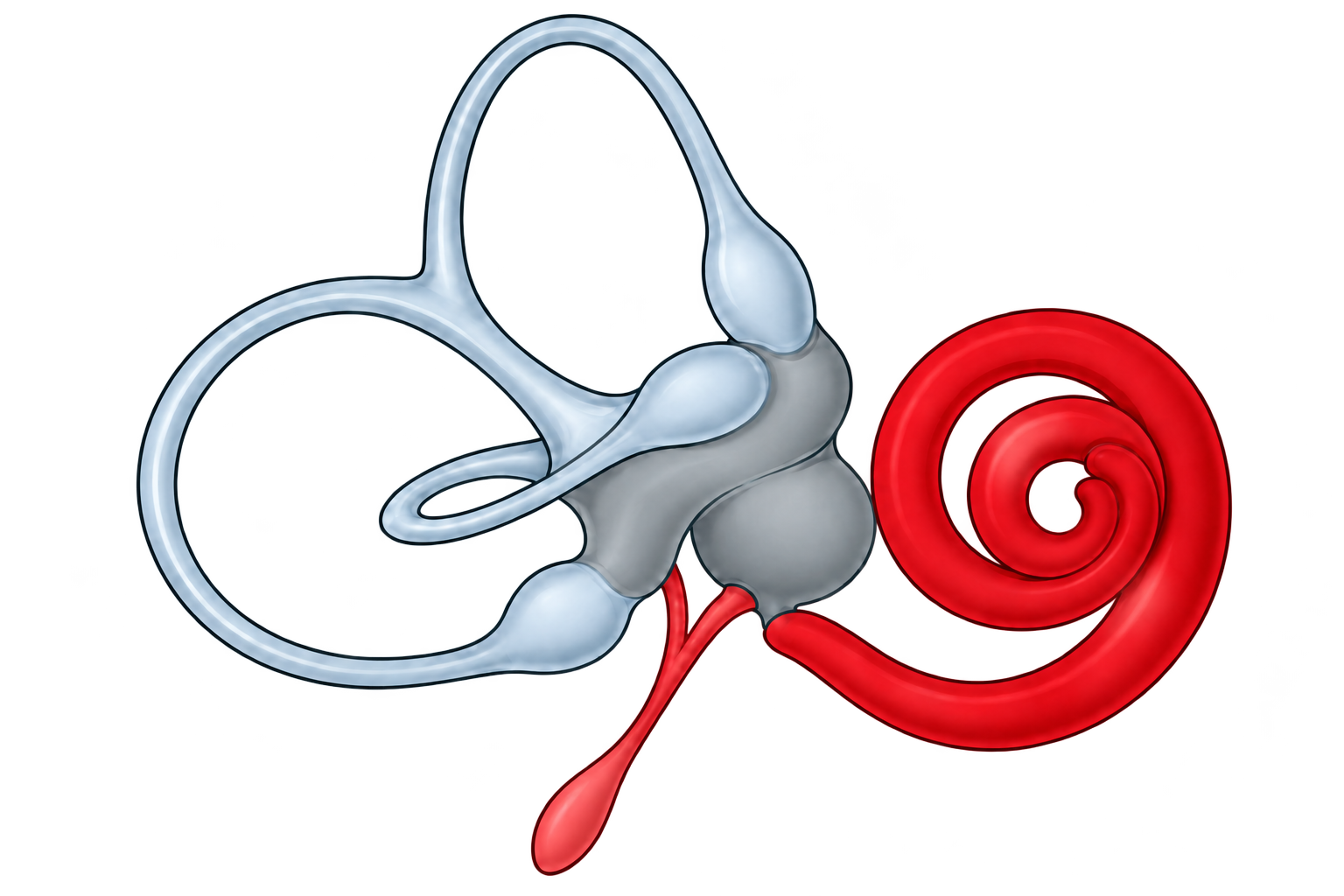
The cochlea is a small, spiral-shaped structure in the inner ear. Within it, sensory cells help turn sound vibrations into signals that the brain interprets as sound.
At Striode, our research begins with the goal of restoring inner-ear function for patients with Ménière’s Disease. We are exploring how new approaches to inner-ear access could create a pathway toward that goal.
Our company’s technology aims to take over the physiology and function of the inner-ear battery.
Beyond our initial focus on Ménière’s Disease, we aim to extend the technology to inner-ear drug delivery, creating new pathways for medications to reach the inner-ear.
We envision future applications in treating other types of hearing loss, building on our work to access the inner ear and restore its physiology.
These are research directions under development, not claims of demonstrated clinical performance.